Prevention Week Day 4
By: David Sherrell

The Developmental Context: Practicing Their Future Selves
Greetings again grown-ups, and welcome to Day 4 of Prevention Week! If you haven’t taken at least a quick look at the previous three pieces from our celebration of effective prevention, it's worth doing before looking at today's topic as we are now into the deep works of Social Norms Approach (SNA) machinery. Today I’m going to share why it’s critical to address the potential misperceptions we’ve defined so far this week early on, for both the prevention of risky behaviors and the promotion of well-being throughout adolescence.

Imagining the Future Creates the Future You See: Anticipatory Socialization
My First Dance
Thinking about it now, what is the first time you can remember preparing for an upcoming, totally unfamiliar and therefore at least somewhat stressful, social situation? How did you prepare? I remember a birthday party one of my classmates in fifth grade had invited the entire class to: it was the first time there would be dancing – most unnervingly, there would be slow dancing. From the moment I received the invitation to the moment I walked through the dance hall doors, I tried to picture myself in this foreign environment – how would I dress? Would anyone want to dance with me? If so, how well would I dance? I imagined my classmates, all in their nice clothes, dancing around me to the fast songs. But as soon as I imagined the DJ transitioning to a slow jam, my subconscious took over direction of this little mind-play. Suddenly those classmates were all paired off, comfortably swaying around me as I stood alone.
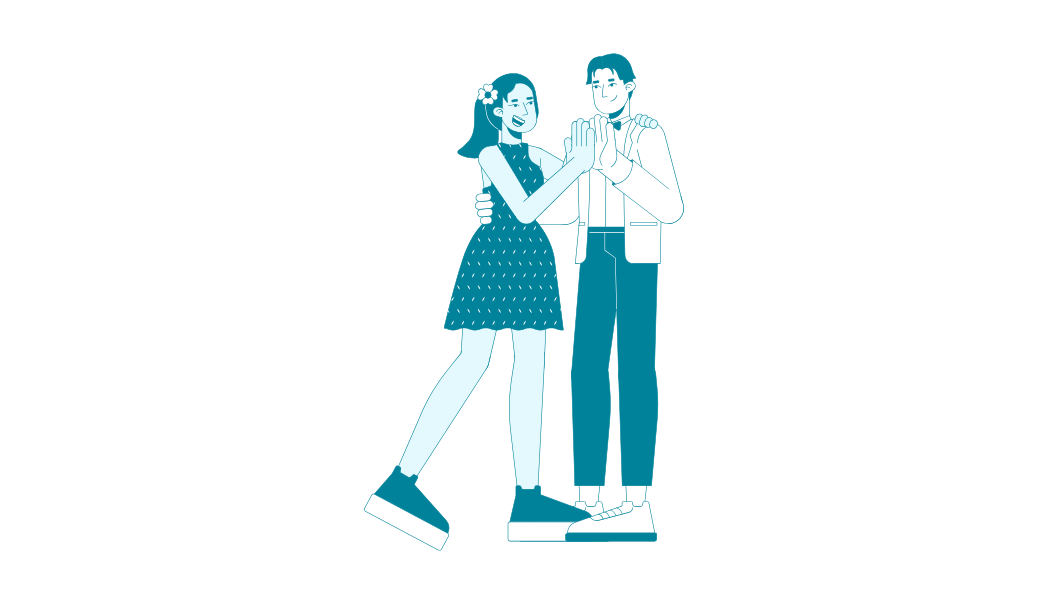
Try as I might, I could envision no other outcome. Still, I was able to envision elements in the environment that might help me – there would be a DJ so I could request songs I felt confident dancing to, a snack or pizza table to pretend to raid if I didn’t think the dancing was going well, and so on. I knew which of my friends would be in attendance, and which of the kids who used to bully me would be there. I knew enough, in other words, to strategize my approach to the evening a little bit.
At the dance, there was a moment – as the first slow song began to play – that I felt sure everyone else was indeed paired off and I was alone. I knew it, I thought, feeling intense rejection – until I spotted some of my friends from the handball court sitting at a table eating pizza, waving me over as soon as they saw me looking sad.

Daydreams Can Program Your Brain
The best that can be said of the night itself is that I did not humiliate myself, but the dance is not the point of the story; the preparation is. It’s a process central to the many life-stage transitions youth pass through as they grow. Brains do not wait until they’re in unfamiliar social situations to confront them; they do as much prep work as possible as far in advance as possible, relying on available information plus imagination to test out different strategies. Developing brains, particularly those of middle- and high-schoolers, depend heavily on this process, known as anticipatory socialization, for several purposes: to manage anxiety, to rehearse appropriate social behaviors, and to shape their identities.
Let's break this term down and explore its implications. “Anticipatory” here refers to the psychological process of imagining a future time and what will happen when we ‘get there’. “Socialization,” in this term, has a slightly different definition than we’re used to. In this case, we’re focused on the training we receive, from many sources throughout life, on how to present ourselves and behave around other people. These sources include social interactions themselves, as well as our imaginary “rehearsals” of them beforehand and our “after-action review” following them.
So to sum it up: anticipatory socialization is the process of imagining your future self in some social setting and predicting how you will behave. This prediction may be how you wish to behave; it may be how you are afraid you will behave. The version you focus on matters: developing brains learn through rehearsal, practice. You've seen babies learn to walk by falling and learn to talk by babbling. Unlike infant brains, however, healthy adolescent brain development requires intentionality. The middle schooler who allows her anxieties to repeatedly show her the “future self” she fears she will become is more likely to become that person; if she resists, countering every automatic imagining of social failure with a scene of social success, success becomes the more likely outcome.

Pulling Back the Lens: Anticipatory Socialization in Prevention
Here’s the big takeaway from today’s concept: every major social decision before a young person has the potential to teach their brain something new about what it means to be themselves, and each decision can move them closer to or further away from the Ideal Future Self they’re beginning to sketch out in their minds. For a prime example of how Prevention Specialists help students maximize this process’ contributions to a healthy future self, let’s imagine a group of twelfth graders planning to attend college in the fall.
Consider how many sources are sending them messages that convince them the social norms of college life are, with respect to alcohol and other drug use, unhealthy. They are conditioned to think that frequent nights of heavy alcohol use are both normal (perceived behavioral norm) and socially acceptable (perceived injunctive norm). It’s the job of the Prevention Specialist, armed with accurate data from scientifically rigorous research like the national Monitoring the Future Survey or the closer-to-home Pennsylvania Youth Survey, to challenge their misperceptions and give them a healthier landscape for the imaginary journeys they will take – one in which their peers, sitting around them in class, are not taking as many or as large risks as they think, nor are the students a year or two ahead of them in college. And most importantly, the Prevention Specialist advises, that need not change – that it will always be socially acceptable to recognize the risks involved in the use of any given substance, and politely decline if offered. With the accurate data and with knowledge of the social norms approach, the Prevention Specialist will engage the whole group in a dynamic, interactive exchange, with the goal not of instructing them how to behave in college, but of offering reliable information with a side of mythbusting: even though there are concerning things going on in terms of risky behaviors and their consequences on many college campuses, there is always a great deal of health to be found, and in spaces and times of unhealth there will always be concern and support. Tomorrow, I will show you the short- and long-term benefits of this type of discussion and how adults who aren’t Prevention Specialists can use the social norms approach to have even more exciting discussions with the youth in their charge.