Expert Angle: Climate Fiction
Justin E. Everett, PhD, talks branches of climate fiction, emerging subgenres and reading recommendations.
For as long as humans have been writing, there have been stories about the natural world. Since the turn of the 21st century, though, climate fiction has emerged as a publishing category, and has garnered readership as climate change continues to be at the forefront of the cultural zeitgeist.
SJU News talked to Justin E. Everett, PhD, a professor of English who teaches courses in climate fiction, about the history and development of the genre.
Climate fiction opens up a window that lets us process and experience grief for what’s happening to our world.
Justin E. Everett, PhD
Professor of EnglishWhen did climate fiction become a recognized genre?
Climate fiction as a term came about in 2005, but it was being written long before then. There are two branches, and the older of the two interests me more as it comes out of speculative fiction. That one really started getting going around 1945 during what cultural historians call the “Great Acceleration” — when we first had definite physical markers of the change in the environment. Eventually, we get important works like Octavia Butler’s “Parable of the Sower.”
Then, after 2000, climate change is becoming more widely known, and what pops up is non-speculative climate fiction, or naturalistic fiction. This includes authors who might have some speculative angle, but aren’t associated with science fiction, like Emily St. John Mandel, Barbara Kingsolver and Charlotte McConaghy.
Why do you think it’s important to read (and to teach) climate fiction?
Climate fiction opens up a window that lets us process and experience grief for what’s happening to our world. It also helps us understand the magnitude of the changes, because when we look at it year to year, it’s gradual, but when we look at over a human lifespan, it’s profound. These books also help us explore the reality of what collapse looks like and how we might be able to rebuild.
Are there any trends you expect to see in the future of the genre?
There’s a new subgenre that’s been gradually emerging — an offshoot of speculative fiction called Solarpunk, which looks at the positive possibilities for the future after the end of global capitalism. What will our lives look like? Are we in more local economies? Do we live in a more agrarian way?
What books would you recommend for a climate fiction beginner?
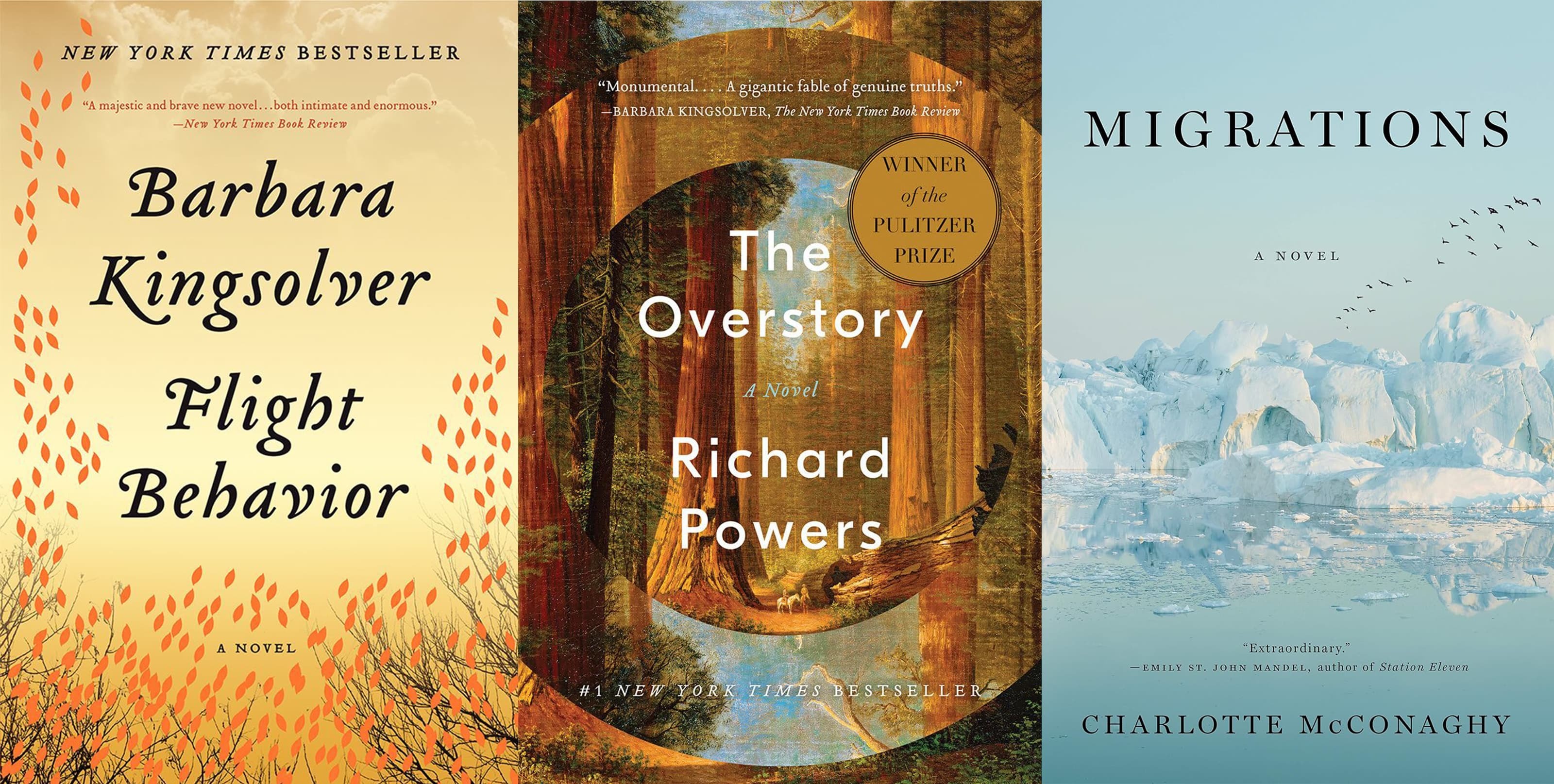
I recommend Barbara Kingsolver’s “Flight Behavior,” Charlotte McConaghy’s “Migrations” and Richard Powers’ “The Overstory.” “The Overstory” won the Pulitzer Prize, and it’s a long book with interwoven stories of different families whose lives center around trees. It’s an epic book in its sense of scale and a really wonderful story.
What’s next on your to-read list?
I go back and forth between speculative and non-speculative and between fiction and non-fiction. I just picked up Vigil, the latest by George Saunders, which is about a dying industrialist who is one of the guiltiest people when it comes to climate change.