Expert Angle: GLP-1 Disposal and Its Environmental Impact
SJU News talked to Thanigavelan Jambulingam, PhD, about the effect of GLP-1 medications on the environment and the importance of proper disposal.

Alongside the explosion of GLP-1 medications for diabetes and weight loss management have come logistical, environmental and public health concerns. Thanigavelan Jambulingam, PhD, a business professor in the Department of Food, Pharma, and Healthcare, researches the pharmaceutical supply chain. He recently published in Pharmaceutical Commerce about an often-overlooked aspect of GLP-1 injectable use: proper disposal.
What are some of the major problems posed by disposal of GLP-1 injectables?
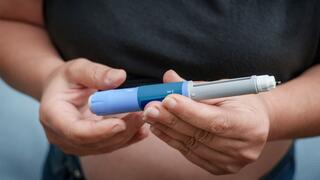
Patients who take GLP-1 injectables self-inject once per week. That means that every month, there are four disposable auto-injectors that they have to throw out. They’re made of solid plastic material that can persist in landfills for decades to centuries. There are millions of people taking four units per month — imagine how much waste that is on its own. If they’re not disposing of it properly, and it ends up in the landfill, then it could end up in the water systems or it could be in other areas where it causes harm.
There’s also the matter of the built-in needles, classified by medical waste as “sharps.” In the fine print on the prescribing information, it says to get an FDA-recommended sharps disposal container, place the sharps in there, and take them to a proper facility to dispose of them. That’s an additional burden for the patient, and many of them don’t even know to do it because they’re not reading the prescribing information. This is where it becomes a public health issue. If someone disposes of it improperly, say in the trash, when someone cleans it up they run the risk of accidentally injecting themselves. If the person who took the shot has some sort of infection, there could be a potential risk of exposure to bloodborne pathogens.
In Their Words
Thanigavelan Jambulingam, PhD
Professor of Food, Pharma and Healthcare
What changes do you hope to see in the way that GLP-1 medications are manufactured or handled?
First, there should be more education on proper disposal and a user-friendly way to do it. When you go to the pharmacy to refill your prescription, you should be able to easily drop off what you’ve used.
There are also some changes that can be made to the actual product. One of those is some type of reusable delivery system — one cartridge that can be used again and again. It wouldn’t solve the problem of the needles, but it would reduce the amount of plastic used. The injectors could also be made of some biodegradable material that would do much less harm to the environment. Finally, it’s possible to make a cartridge with a needle lock, so once you use the auto-injector, there’s a type of sleeve that the needle can go in so no one will be exposed to it while it’s encapsulated.
More broadly, the GLP-1 disposal challenge reflects a systemic gap in product stewardship, where responsibility is diffused across patients, pharmacies, municipalities, and manufacturers. Limited take-back programs and the absence of standardized disposal pathways point to the need for coordinated policy and design solutions, particularly given the rapidly growing volume of disposable injection devices entering the waste stream each year.
How do you see GLP-1 offered in pill form changing the landscape?
It’s important to note that an oral GLP-1 pill has been on the market for three or four years. Rybelsus has been on the market for diabetes management for a few years — the new one is that same drug approved for weight loss.
There are a lot of benefits to the pill being made available. Pills are much easier and cheaper to make than injectables from a manufacturing perspective, and it’s great for people who are afraid of needles. There’s a definite convenience factor, which means there will be more widespread adoption. Of course, there’s a downside. Pills are much easier to counterfeit than injectables, which can put people in danger if fake products are distributed.