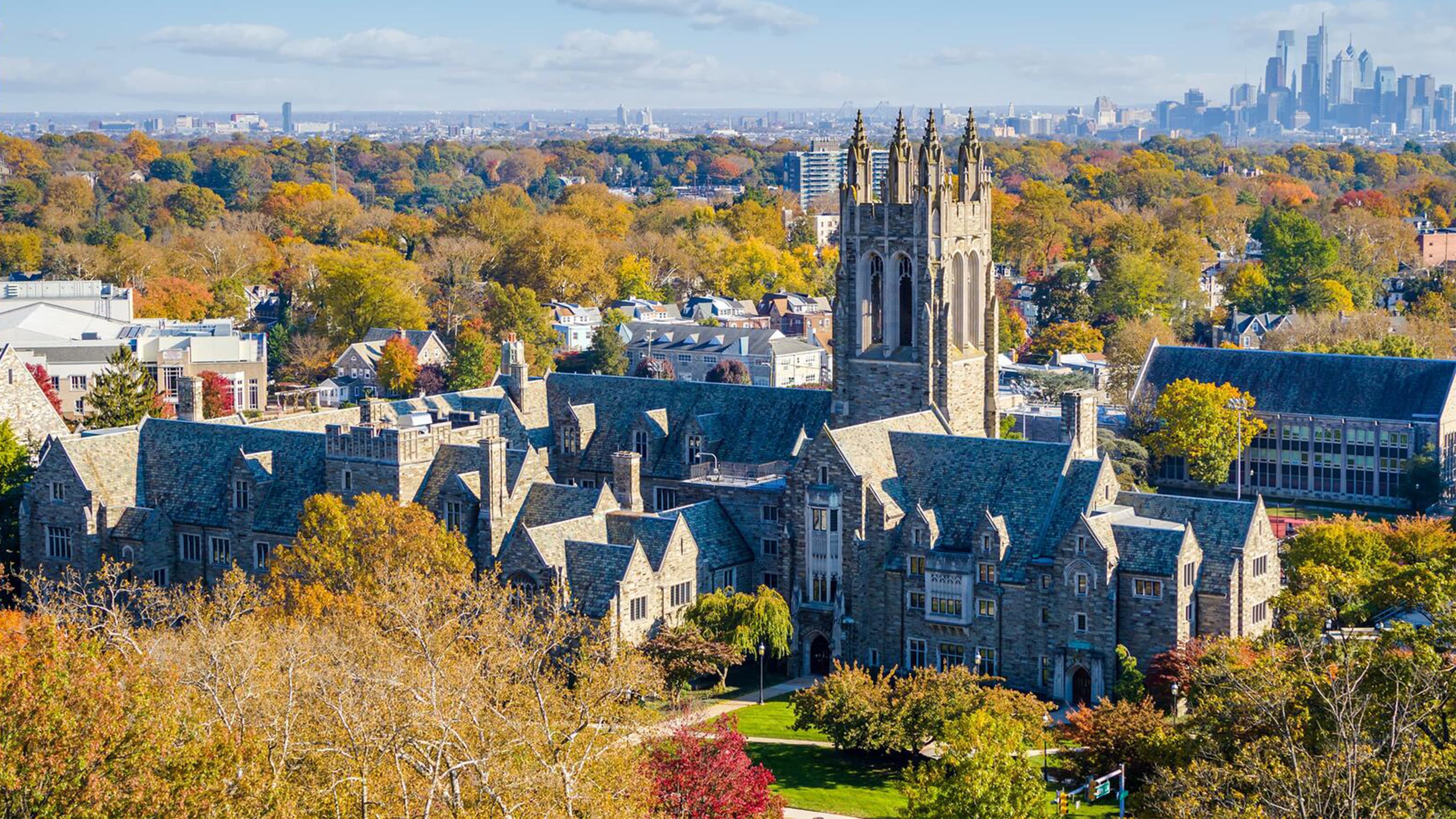
Saint Joseph’s Earns Carnegie Elective Classification for Community Engagement, Joining 7% of Universities Nationwide
The University has been recognized for deepening community partnerships and addressing urgent societal challenges as part of its mission-driven, strategic priorities.

Saint Joseph’s University has once again received the prestigious Carnegie Elective Classification for Community Engagement (CE), awarded by the Carnegie Foundation for the Advancement of Teaching (2026). The classification honors colleges and universities demonstrating an extraordinary commitment to community engagement and reciprocal partnerships, affirming Saint Joseph’s role as a trusted civic leader.
This year, 237 institutions earned the CE Classification, bringing the total number of colleges and universities currently holding the designation to 277 — approximately 7% of institutions nationwide. In affirming the latest classification, the Foundation cited Saint Joseph’s commitment to deepening community partnerships and leveraging its resources to advance teaching, research and civic engagement.
While this marks the third time Saint Joseph’s has been recognized, it’s the first inclusion for the University’s Lancaster and University City locations — reflecting the institution’s expanding resources and expertise, and reinforcing its role as an anchor institution committed to experiential learning, community collaboration and addressing societal challenges.
“The Carnegie recognition is a significant testament to the University’s long-term commitment to public purpose,” says Jean McGivney-Burelle, PhD, provost and senior vice president of academic affairs. “As we look ahead to expanding experiential learning opportunities for all SJU students, this designation affirms the strong foundation we have built, particularly through our centers and institutes, to cultivate deep, lasting community partnerships.”
Since earning its first Carnegie Community Engagement Classification in 2010, Saint Joseph’s has continued to strengthen institutional policies, practices and outreach efforts that support reciprocal, mission-driven community engagement. Community-engaged scholarship is recognized as a primary indicator in tenure and promotion decisions for faculty, reinforcing the integration of teaching, research and service. Concurrently, the intentional growth of centers and institutes has expanded opportunities for students to apply classroom learning in real-world contexts while advancing common priorities.
SJU students are creative and passionate learners who provide vital ideas and energy that help to stabilize services while also supporting expansion and growth. The students have become part of our community and are a tremendous resource.
John W. Green
Executive Director, Augustinian Defenders of the Rights of the PoorThese efforts are reflected in a wide range of academic and community-based initiatives, including: students in the Institute of Clinical Bioethics delivering lifesaving care to the epicenter of the opioid epidemic; occupational therapy students partnering with the Faith-Justice Institute to offer health assessments and rehabilitation for retired Jesuits; hundreds of students supporting health initiatives and after-school programming at the nearby Samuel Gompers School; the enrollment of approximately 200 students per semester in the Faith-Justice Institute’s service learning program; and the latest establishment of the University’s Executive Fellows in Mission Programs, designed to mentor students in human-thriving work and to deepen partnerships with community-based organizations.
“The Carnegie Re-Classification for Community Engagement signals to our current and potential partner organizations that, once again, SJU’s community engagement practices have been evaluated by an outside party and have met the criteria for this distinction,” says Jill Welsh, director of the Faith-Justice Institute.
The University’s partner organizations consider Saint Joseph’s students an integral part of their operations.
“Nonprofits have more work to do than there are people to do it. SJU students are creative and passionate learners who provide vital ideas and energy that help to stabilize services while also supporting expansion and growth. The students have become part of our community and are a tremendous resource,” says John W. Green, executive director of the Augustinian Defenders of the Rights of the Poor.
First established in 2006, the Carnegie Elective Classification for Community Engagement is a voluntary, evidence-based designation that requires institutions to undergo a rigorous self-study and documentation process. The classification is awarded every six years and is widely regarded as a benchmark for institutional excellence in community engagement.